
Supporting the Readiness of Ghana for Local Vaccine Manufacturing
Supporting the Readiness of Ghana for Local Vaccine Manufacturing
The Chanjo Hub is an African-led academic-industry consortium dedicated to strengthening vaccine manufacturing capacity across Africa. Funded by UK Research and Innovation (UKRI) through the UK Vaccine Network (UKVN) and led by Imperial College London, the consortium brings together partners from Ghana, South Africa, and the UK, including CSIR-Animal Research Institute, CSIR-STEPRI, CSIR-South Africa, the University of Cape Town, Liselo Labs, CPI, TASA Pharma, and Avril BioPharma, with a shared mission to make local vaccine production a viable and sustainable reality on the continent.
At CSIR-STEPRI, we lead the Economics Workpackage for Ghana arguably one of the most critical pieces of the puzzle. Because while the science of making vaccines locally is advancing rapidly, the economics question remains largely unanswered: what does it cost to manufacture a vaccine dose locally in Ghana, and under what conditions does local production become financially competitive? Without a credible answer to that question, investment decisions stall, policy support remains weak, and the business case for local manufacturing stays unproven.
That is precisely what our workpackage is designed to address, through a rigorous Activity-Based Costing (ABC) framework that traces every cost to every activity in the production process, across three manufacturing types: human vaccine manufacturing, veterinary vaccine manufacturing, and fill-and-finish operations.
This work is being driven by a dedicated team at CSIR-STEPRI led by Dr. Justina Adwoa Onumah with Dr. Nana Kofi Safo, Mr. Nana Yamoah Asafu-Adjaye, Dr. Anderson Kwasi Anhwireng, and Ms Abigail Aboagye, whose combined expertise in science, technology, and innovation policy, applied economics, and research methods is central to the rigour and relevance of this study.
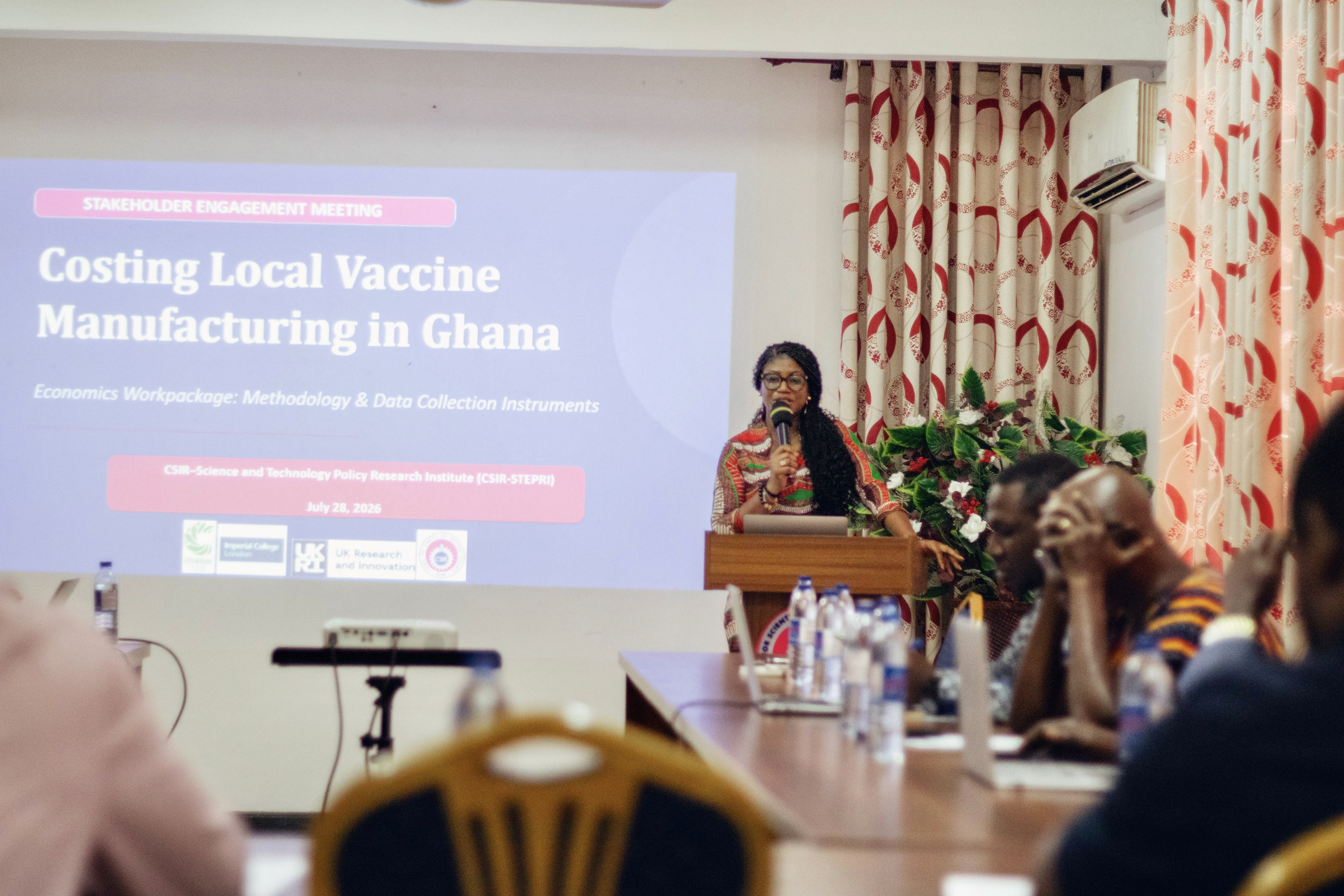
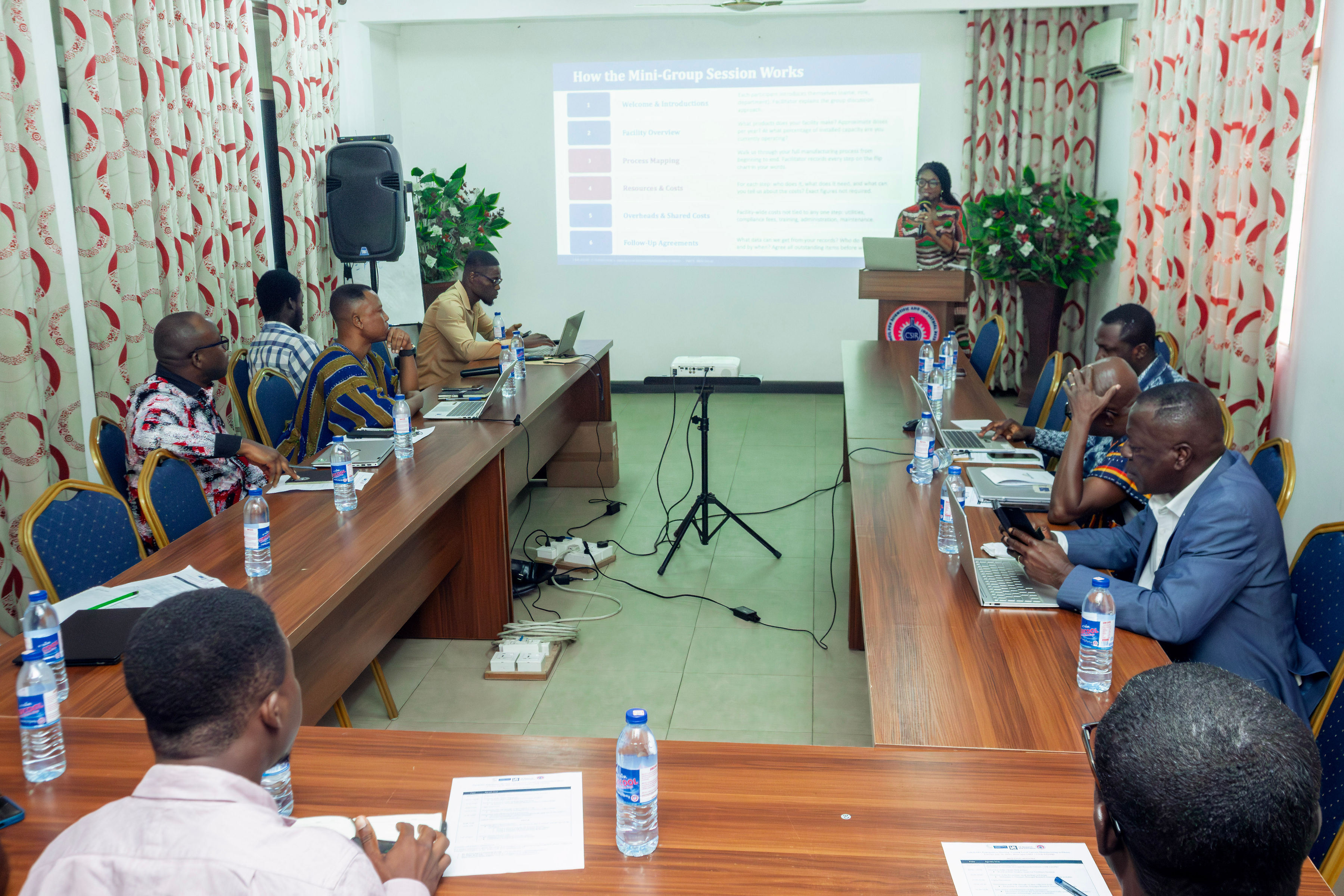
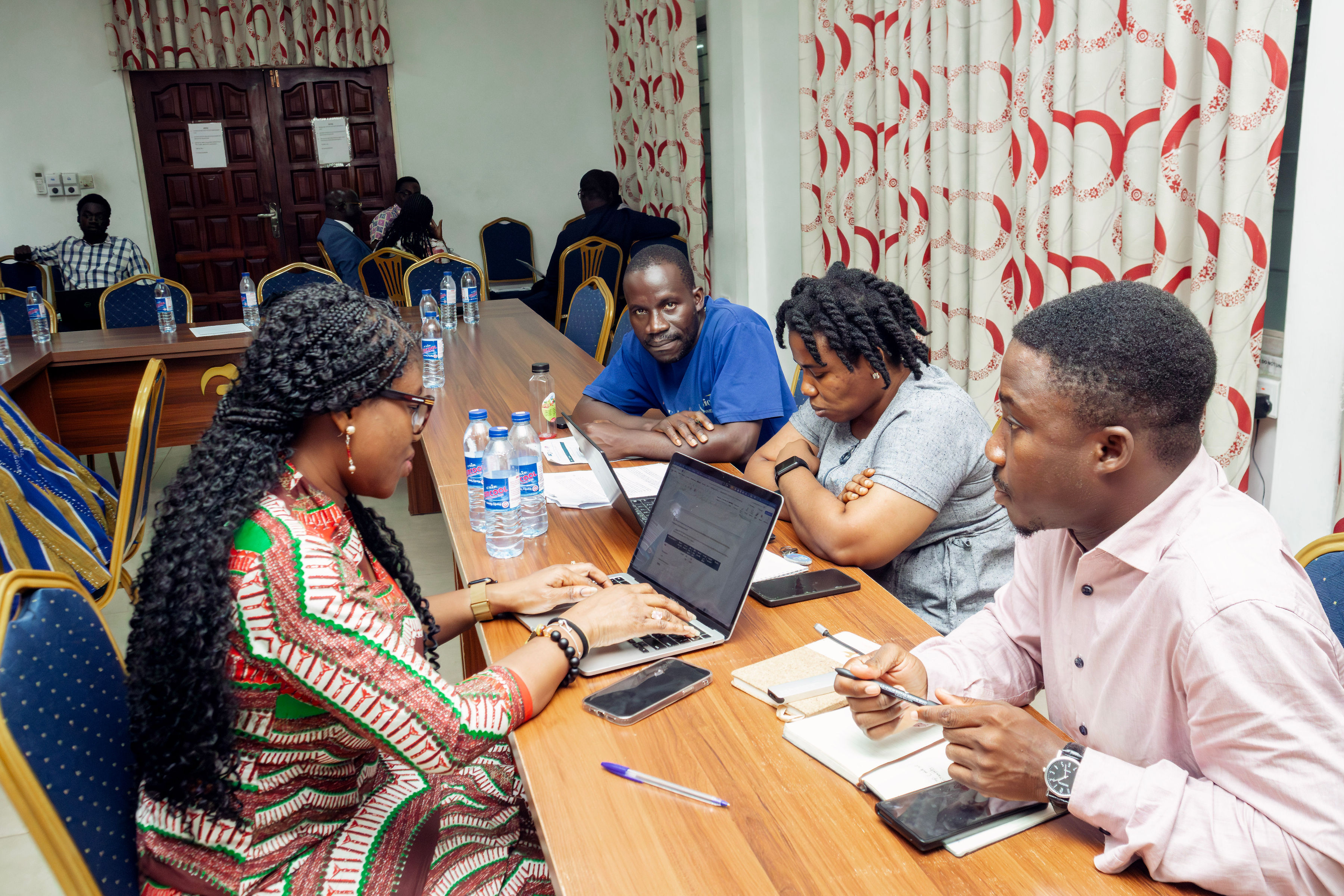
This week, the team held a stakeholder engagement meeting bringing together practitioners and industry players to contribute primary data through structured mini-group discussions. The goal was to ensure the cost model reflects the real operational experience of Ghana's manufacturers, not assumptions drawn from the literature alone. Our approach was to also firm in on the importance of bottom up and cocreation approach to bridge the gap between industry and research so that our methodologies and outcomes are relevant for the evidence user (industry)
We were delighted to be joined by key players across Ghana's vaccine ecosystem, including Afrivax, DEK Vaccines, Veterinary Services, Atlantic Life Sciences, and WAACBIP, representing the full breadth of local manufacturing, from human and veterinary vaccine production to fill-and-finish operations.
The conversation was rich, candid, and deeply informative. Participants generously shared insights into their processes, operational realities, and cost structures, exactly the kind of primary data that will make this study matter.
We look forward to sharing our findings with the sector and to contributing to the evidence base Africa needs to make local vaccine manufacturing a sustainable reality.
#ChanjoHub #VaccineManufacturing #Ghana #Africa #PublicHealth #CSIRSTEPRI #UKRI #ActivityBasedCosting #LocalProduction #AfricanHealth #VaccineEquity #HealthEconomics

Caregories
Must Read
_thumbnail.jpg)


Connect
Stay With Us
news and upcoming events